
or Chapter VIII of Marti Soosaar’s e-book “A New Beginning”
What’s on your mind is on your tongue. What’s on your tongue is on your mind.
You’ve probably noticed that when you promise someone something, saying it out loud immediately puts you under a certain amount of moral pressure, regardless of whether the promise matters to the other person. Above all, we don’t want to see ourselves as people who break their word, and we like our friends to think of us as people who keep their promises.
You can probably see where I’m going with this. If you make a promise to many people, you’re much more likely to achieve it. Of course, announcing things out loud is not particularly comfortable. It comes with a number of fears.
What if I fail? Well, you never know—it also depends a great deal on what you promised. Erki Nool once said out loud that he wanted to become an Olympic champion. The critical people around us—and there are plenty of them—could mock him for being all talk. They kept mocking him until Erki Nool did become an Olympic champion. Then they moved on to their next target.
There are other kinds of examples, too. The press conference held by Estonia’s national ski team at the start of each season is a favorite event among the cynics. It’s a shame the top-ten and points-scoring finishes our skiers say they are aiming for do not count in the World Cup series. At the end of the season, all we can record are 70th–80th-place finishes and once again say that the promises were not backed up by results. The wisecrackers get to sneer: “As usual, the Estonians enter the international competition circuit with great expectations and return with a wealth of experience.”
The lesson for you is to word your promises in a way that makes them achievable. Your friends won’t mock you if you promised to lose 20 kg but lost 15 kg. Of course, it might be a different story if you promised to lose 20 kg but gained 2 kg instead. But that won’t happen if you’ve thought everything through properly!
These clearly defined goals should, of course, be measurable. That follows from the very definition, because otherwise they are not clear. On New Year’s Eve, while knocking back vodka shots with friends and gnawing on a pork knuckle, it’s easy to say, “In the new year, I’m going to start exercising properly.” That is about as vague as a promise can be. If you finally walk to work one day on September 12 because your father borrowed your car to take a few things to the countryside, you can tell yourself that you fulfilled your promise.
I will lose 20 kg. I will start running 3 times a week. I will start keeping a training diary. These are much more specific promises. Make your promises measurable.
Be realistic when making a promise—that’s another valuable piece of advice people tend to ignore. What I mean is that you shouldn’t promise “to conquer the summit of Džomolungma this year” during a sauna night when your blood alcohol level is already above 1.5‰, you’ve had plenty of beer and still have more ahead of you, without having done even the slightest groundwork on the idea.
I have a wonderful friend who used to be a high-level athlete and is now a dedicated sports fan and supporter. At sauna nights after recreational sporting events, he sometimes tends to announce promises along these lines: “Next year, I’ll be on the starting line too. I’ll start training and lose 20 kg.” Of course, none of that happens, and the following year he repeats the same speech after the same event. In fact, I have several friends like that, and you probably do too. Hopefully, now that he is reading this, things will change for him and he’ll start thinking those promises through more carefully.
A promise made in such a jovial mood often carries little weight because it has not been properly considered or stored in the brain. Some very important questions remain unanswered: When will I train? What kind of training will I do? How will I approach losing weight? Who will make a plan for me? Nothing has been thought through. There is only the feeling that you’d like to be young and athletic again and cover the gaps between hurdles in 3 strides.
The moral here is not that we shouldn’t have fun with our friends or reminisce about the great memories we made together in sport. Of course, no harm comes from throwing these words around at a sauna party either. Everyone has a good time, and dreams like these naturally make for enjoyable conversation. It’s simply that if we want those promises to serve any purpose, we need to think them through more carefully and revisit them at a calmer moment, assess them critically and, if necessary, adjust them by applying a reality factor. That is, of course, assuming we even remember having promised anything.
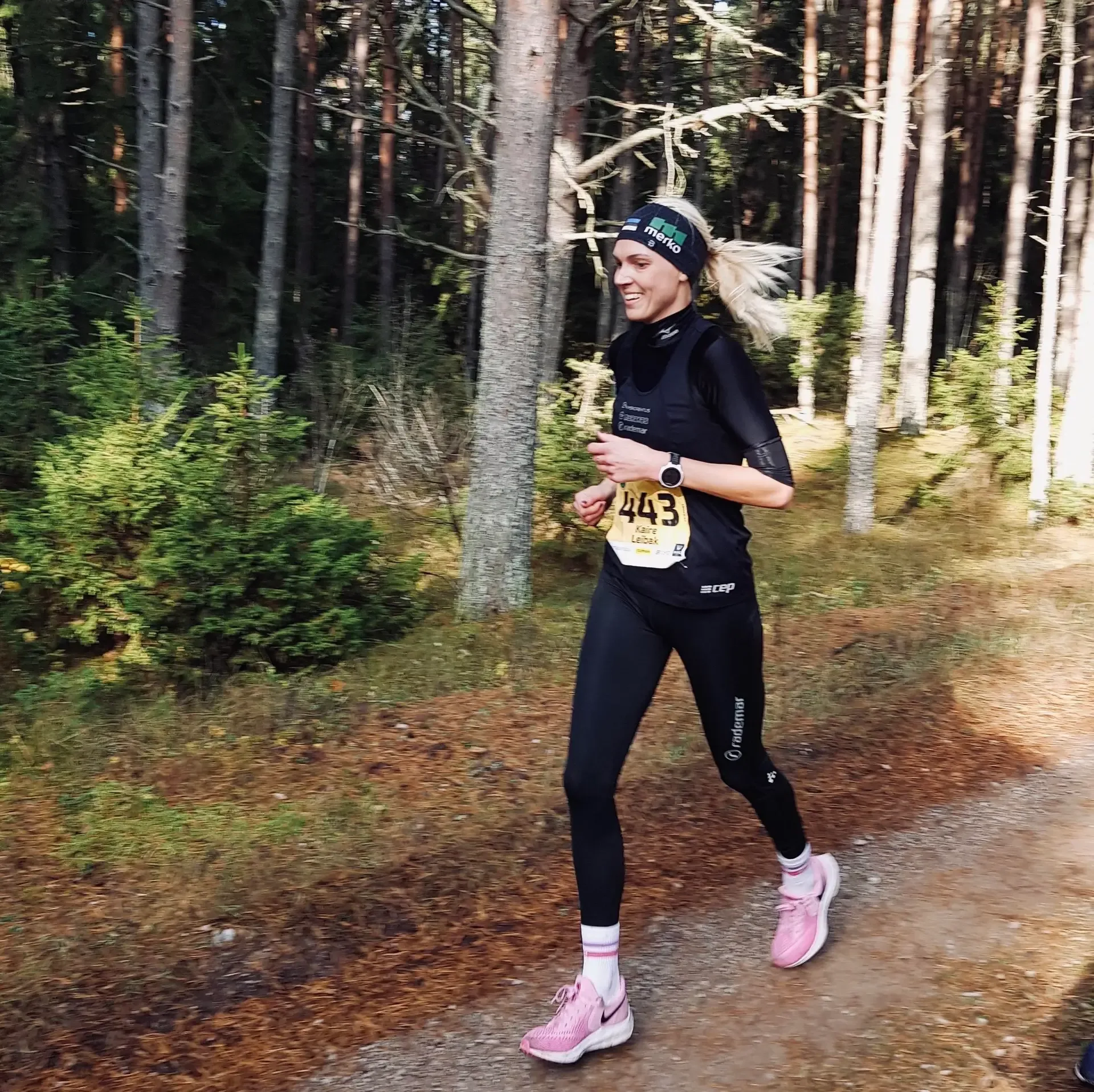
Let’s return for a moment to a point Kaire Leibak made earlier in this book. She trains as soon as she gets home from work. She has defined not only her goal but also the time when she will train. Whether you put your workout in your calendar or specify an exact time, this is extremely important. It shows that you have thought things through. “The first thing I’ll do when I get home from work is go for a run” is very specific.
Time and place matter. If you don’t decide when and where you will train, it is unlikely to ever happen. Keep that in mind when making and planning these promises.
If losing weight is one of your major goals when you start becoming more active, you cannot exactly schedule time for the weight loss itself. It is the kind of process that must happen continuously. Even so, you can still make plans and schedule specific actions. “I will stop eating chocolate” is a specific promise. “I will join the Fitlap program and start planning my daily menu there” is another specific promise. “I will weigh myself every day” is a third.
That last suggestion is somewhat controversial because various studies show that people who weigh themselves every day are likely to lose more weight than those who do it less often. However, this group also includes more people who “go crazy” and give up. Whether daily weighing helps or hinders you depends on your mental resilience and analytical skills.
René Laane, the founder of the meal-planning program Fitlap mentioned above, joined us at FitQ for the “Energia ülekanne” podcast, which you can also listen to or watch on FitQ. He knows that a promise made out loud is a promise you keep. On the podcast, he promised that by the end of March 2021, he would achieve some of the best shape of his life. In general, that promise is not as specific as it should be, because as a former powerlifter, René could also name a specific bench press or deadlift result. However, his experience of understanding his own body is considerable, and he is also a complete “no BS man,” so I have no doubt that he can assess what he has achieved more objectively than you and I combined.
I’m trying to be more specific, and I’m also writing my promise down in more concrete terms because otherwise I don’t entirely trust my own objectivity. My specific promise is this: throughout 2021, the first thing I will do every morning when I sit down at my computer is complete 1 pack (50 words) in the Lingvist language-learning program.
For anyone still unclear about that promise, Lingvist is a foreign-language learning program built around learning words by repeating and writing them down. Each lesson quizzes you on 50 words, and completing one pack takes me about 10 minutes. Go and check it out. It’s a great product made in Estonia. Then write down your own specific promise and say it out loud somewhere.
Still not convinced that saying it out loud helps? Perhaps you don’t really want to promise your friends anything, but you’d still like to draw on some of their energy and encouragement?
In that case, create a Strava account and invite all your Facebook friends who use Strava to follow you. Then, when you go out for a run or bike ride and start Strava, your friends can give you a “thumbs-up.” Whether we admit it to ourselves or not, it does make us feel a little warm inside.
There are also plenty of alternatives to Strava, so you can Google them if, for some reason, you don’t like the color orange and think the user interface could use more blue, for example.
If you are absolutely certain that you don’t want to bother your friends with any of this, there is a little hack for that too. I discovered it recently and use it to help me remember things. Simply say it out loud to yourself. No one needs to be around if you are afraid they might look at you strangely.
Admittedly, it might seem odd if I were weighing a cabbage in a store and someone behind me suddenly sighed out loud, “As soon as I get home, I’m going for a run.” If you say it to yourself somewhere quiet, you won’t bother anyone. I have used it like this: before going to the store, I tell myself that as soon as I leave, I’ll stop by the parcel locker and collect my things. It had become very common for me to know perfectly well that I had a package waiting in the locker but simply forget to pick it up. At the very least, this tactic helps me remember things better—including going to work out.
If you don’t dare make a promise out loud to others, make it to yourself.
This was Chapter VIII of Marti Soosaar’s e-book “A New Beginning.” We have also published the previous chapters, which you can read on our blog. You can download the complete e-book HERE.
